
People
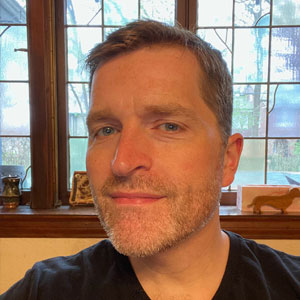
Jason Hassenstab, PhD
Jason Hassenstab, PhD, is an Associate Professor of Neurology and of Psychological and Brain Sciences and the director of the Cognitive Technology Research Laboratory (CTRLab) at Washington University in St. Louis. He also leads the Cognition Cores for the Dominantly-Inherited Alzheimer Network-Trials Unit (DIAN-TU) and the DIAN observational study and the Charles F. and Joanne Knight Alzheimer’s Disease Research Center. The CTRLab’s focus in on using technology to improve cognitive assessments in Alzheimer’s disease and other disorders. We use measurement burst designs, based on principles from ecological momentary assessment, to measure cognition rapidly and frequently on smartphones in normal and clinical populations. We also develop web-based cognitive assessments designed to be sensitive to the very earliest stages of neurodegenerative disease. Dr. Hassenstab has been continuously funded by the NIH since 2007 and also receives funding from foundations. His most recent projects include development of the Ambulatory Research in Cognition (ARC) smartphone application for the DIAN observational study, the DIAN-TU Phase III clinical trials, and the Healthy Aging and Senile Dementia program project grant at the Knight ADRC. Prior to pursuing academics, Dr. Hassenstab toured internationally as a professional jazz saxophonist, often sporting a purple pinstriped zoot suit, and made hundreds of dollars. He completed a bachelor’s degree in Jazz and Contemporary Music Performance at New York University and a PhD in psychology under mentorship of Dr. Antonio Convit at New York University and Fordham University. He then completed a Fellowship at Brown University and joined the faculty at Washington University in St. Louis in 2010.
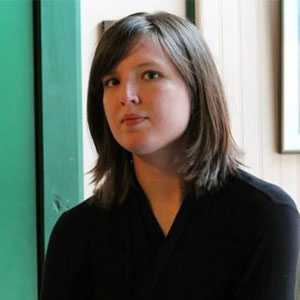
Sarah Adams, MS
Sarah Adams is a Clinical Research Coordinator with the CTRLab and the Dominantly Inherited Alzheimer Network Expanded Registry (DIAN EXR), specializing in the implementation of Dr. Hassenstab’s remote cognitive assessments in DIAN participants and researcher-to-software developer translation services. She holds a BA in Psychology from McKendree University and an MS in Experimental Psychology from Western Illinois University. She previously worked in the Cognitive Control and Psychopathology Lab with Dr. Todd Braver on the Danforth campus of Washington University and as an animal caretaker at the Legendary Morgan Farm in Lebanon, IL. Under non-pandemic conditions, she attends fitness and martial arts classes to offset her primary hobby of having a terrible diet; enjoys reading, drawing, and spending time with the two members of her Cat Lady Starter Kit, Pippa and Voxel; and uses semicolons in sentences to show she has been to college.
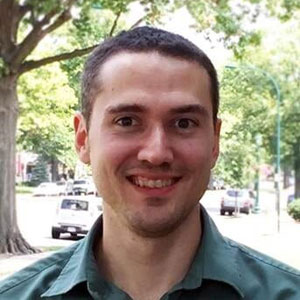
Andy Aschenbrenner, PhD
Andrew (Andy) Aschenbrenner, PhD is an Instructor of Neurology at Washington University in St. Louis. He has expertise in the development, administration, and analysis of cognitive and behavioral tests in healthy older adults and individuals with preclinical and very mild Alzheimer disease (AD). His current interests include evaulating the utility of intraindividual variability in cognition and personality as predictors of AD risk. He is also interested in applying novel statistical techniques (e.g., dynamic structural equation modeling) and computational models to further understand cognitive changes in the earliest stages of AD.
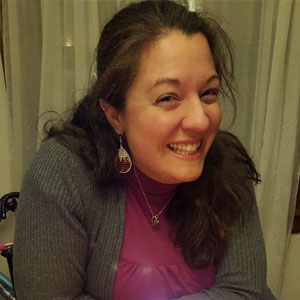
Sarah H Stout, MSW, LCSW
Sarah Holtz Stout is a Clinical Research Specialist in the Cognitive Technology Research Laboratory (CTRLab), which is part of the Department of Neurology at Washington University in St. Louis. The CTRLab works in conjunction with the Knight Alzheimer Disease Research Center (ADRC) and the Dominantly Inherited Alzheimer Network (DIAN). Sarah manages the lab, along with the development of the of the Ambulatory Research in Cognition (ARC) smartphone application, and she assists the PI, staff, and collaborators with its implementation. She previously worked in the DRIVES lab for five years, managing lab operations for a study on preclinical Alzheimer disease, driving, and mood. Ms. Stout used her social work training at the Alzheimer’s Association from 2007-2014, managing support groups for 20+ counties and providing individual consulatations to family caregivers, and from 2014-2015 as a hospice social worker assisting patients and their families. She received her bachelor’s in psychology, followed by her master’s in social work, both from Washington University. She enjoys hanging out with her partner and their two daughters, bike rides, musical theater, and baking/eating just about any kind of cake, except lemon.
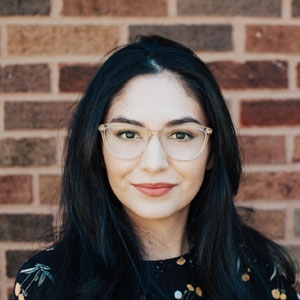
Marisol Tahan, BS
Marisol Tahan graduated with her B.S. in Biology from Westminster College (UT). She is an advocate for technology in research and has worked in the field since day one. She is the lead research coordinator for the Healthy Aging and Senile Dementia (HASD) ARC Study where she gets to interact with the lovely volunteers of the Memory and Aging Project. She enjoys getting to meet new people every day and introducing them to technology and research.
Marisol has two pups, Zoe and Ellie, who are her loyal coworkers in WFH times. See their bios for more.
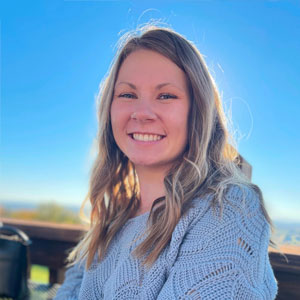
Hannah Wilks
Hannah graduated from Saint Louis University with her B.S. in Neuroscience and Minor in Psychology. Hannah is a Psychometrist, performing in person and remote cognitive assessments with Memory and Aging Project participants. Hannah is passionate about Alzheimer’s research and excited to work with so many dedicated MAP participants. She hopes to obtain her PhD in Clinical Neuropsychology and continue to conduct research related to aging, and dementia. In her spare time, Hannah enjoys working out at her gym in Soulard, spending time outdoors, and daydreaming about her next road trip with her significant other. Trip recommendations are always welcome!
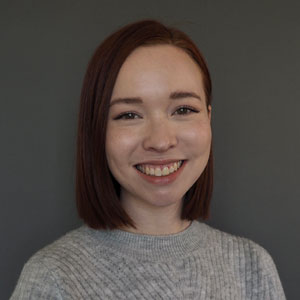
Leslie Symonds
Leslie Symonds is a clinical research coordinator with the CTRLab, working with the Dominantly-Inherited Alzheimer Network in the Trials Unit (DIAN-TU) and the Observational (DIAN-Obs) study. She is excited to be continuing a life in clinical research in the Neurology department on such important studies, with such a goofy team. Leslie received her bachelor’s in Biology (Genetics and Biotechnology Track) from the University of Iowa, where she worked for nearly 4 years investigating the gene regulatory networks of neural crest development in Robert Cornell’s zebrafish lab. She graduated with her master’s in health behavior research at Washington University in St. Louis, while working full-time coordinating clinical studies with the Cystic Fibrosis team at Children’s Hospital. This work with children and families established Leslie’s passion for making clinical research accessible and empowering for all involved. She enjoys writing/performing sketch, doing improv comedy, and the occasional Shakespeare in the Park engagement.
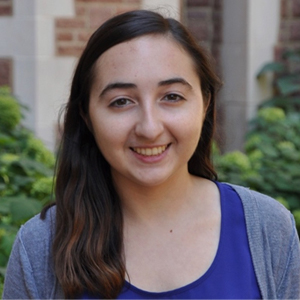
Jessica Nicosia, PhD
Jessica Nicosia, PhD is a Postdoctoral Research Associate in the in the Cognitive Technology Research
Laboratory (CTRLab). She graduated with her Ph.D. in 2021 from the Department of Psychological and
Brain Sciences at Washington University in St. Louis, working with Dr. David Balota and received her B.A.
and M.S. degrees from the University of Michigan in 2016, where she studied with Dr. Cindy Lustig. She
has expertise in how attentional control, mind-wandering, and memory change in the context of healthy
aging and Alzheimer disease (AD). Her current research interests involve evaluating the sensitivity of
remote cognitive tests in predicting preclinical AD.
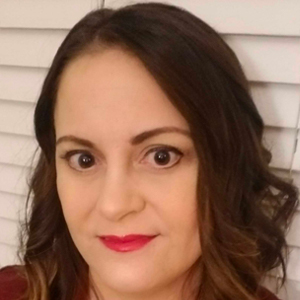
Jennifer Smith
Jennifer Smith has over 15 years of experience in management consulting, research science, and higher education environments. Her training is in behavioral observation, measurement, and quantitative analysis, and she holds a Ph.D. in Experimental-Cognitive Psychology from Saint Louis University.
Jennie currently serves as the Clinical Research Specialist for the Dominantly-Inherited Alzheimer Network-Trials Unit (DIAN-TU) and the DIAN Observational studies’ Cognition Cores. This role consists of supporting global teams to ensure appropriate training and collection of data. Jennie has identified leading-edge IT solutions to support the changing needs of training, data collection, and communication across countries and cultures since 2014.
She spends her spare time hanging with her daughter, significant other, and pup Oshie, non-profit fundraising, traveling and exploring new restaurants in St. Louis. Extracurricular activities include avoiding chit-chat (specifically if it relates to CrossFit) and chasing after her supervisor to get study documents signed. Dirty little secret: she uses a Keurig.